Alexander & Sheridan Architecture Supershared was an interactive installation developed as part of Occupied – an exhibition at the RMIT Design Hub curated by Fleur Watson, David Neustein and Grace Mortlock, showcasing creative proposals for re-occupying the contemporary city in light of dwindling resources, population growth and rising inequality.
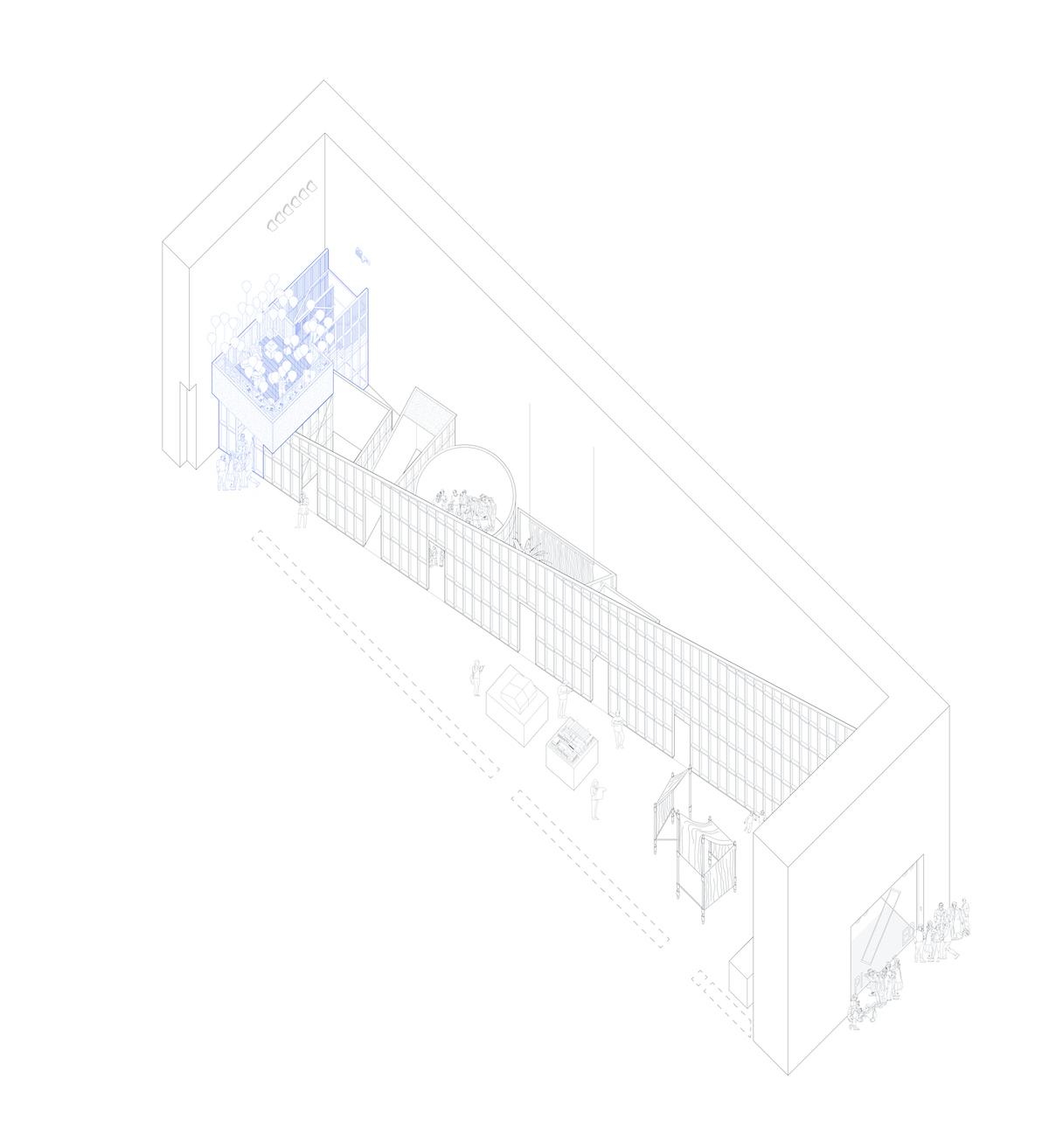
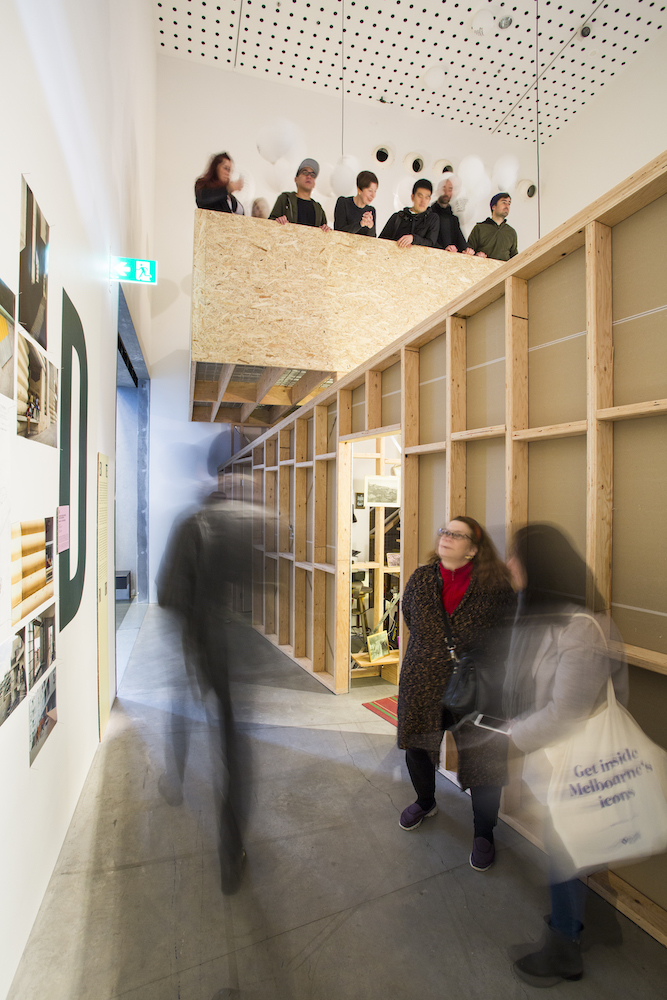
Supershared Loft, with Sibling Architecture. Image credits: Tobias Titz

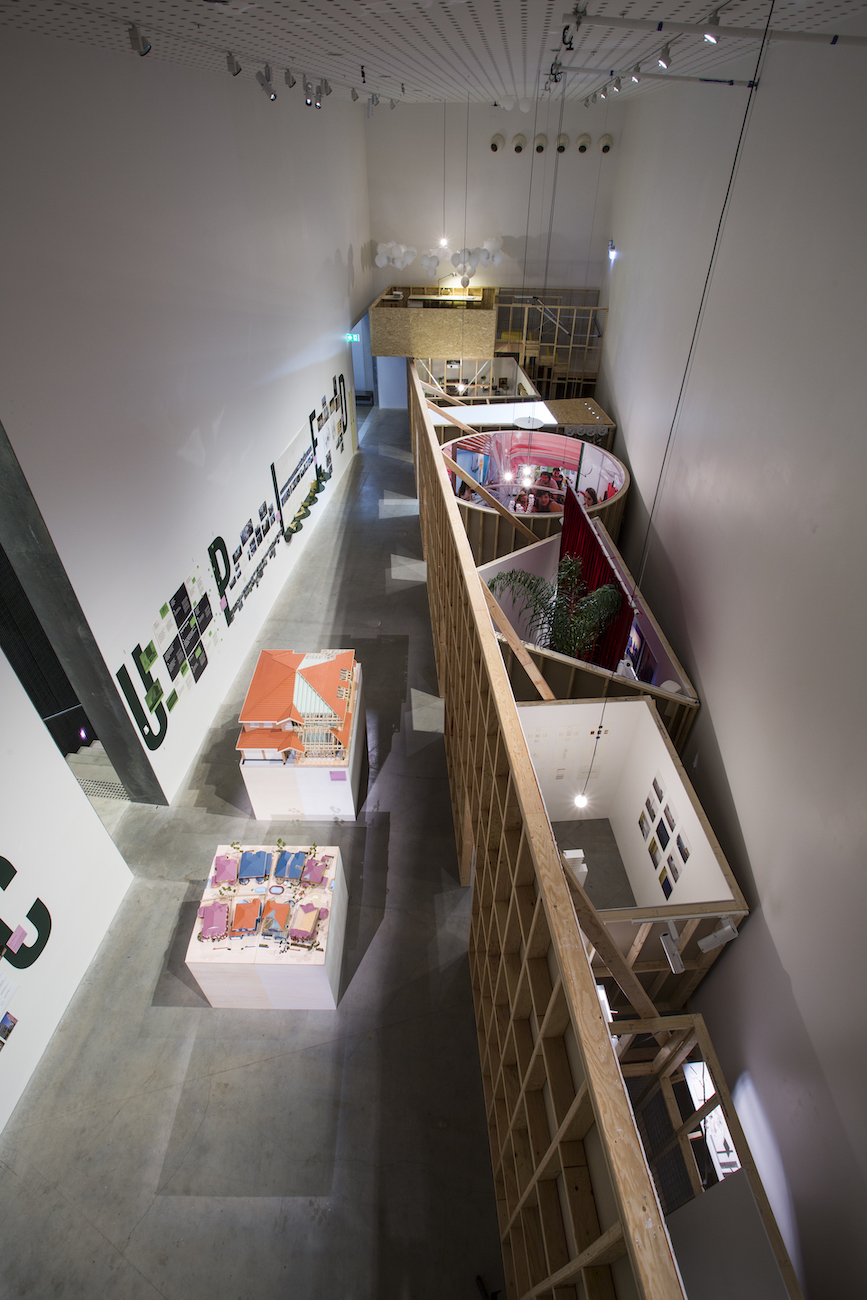
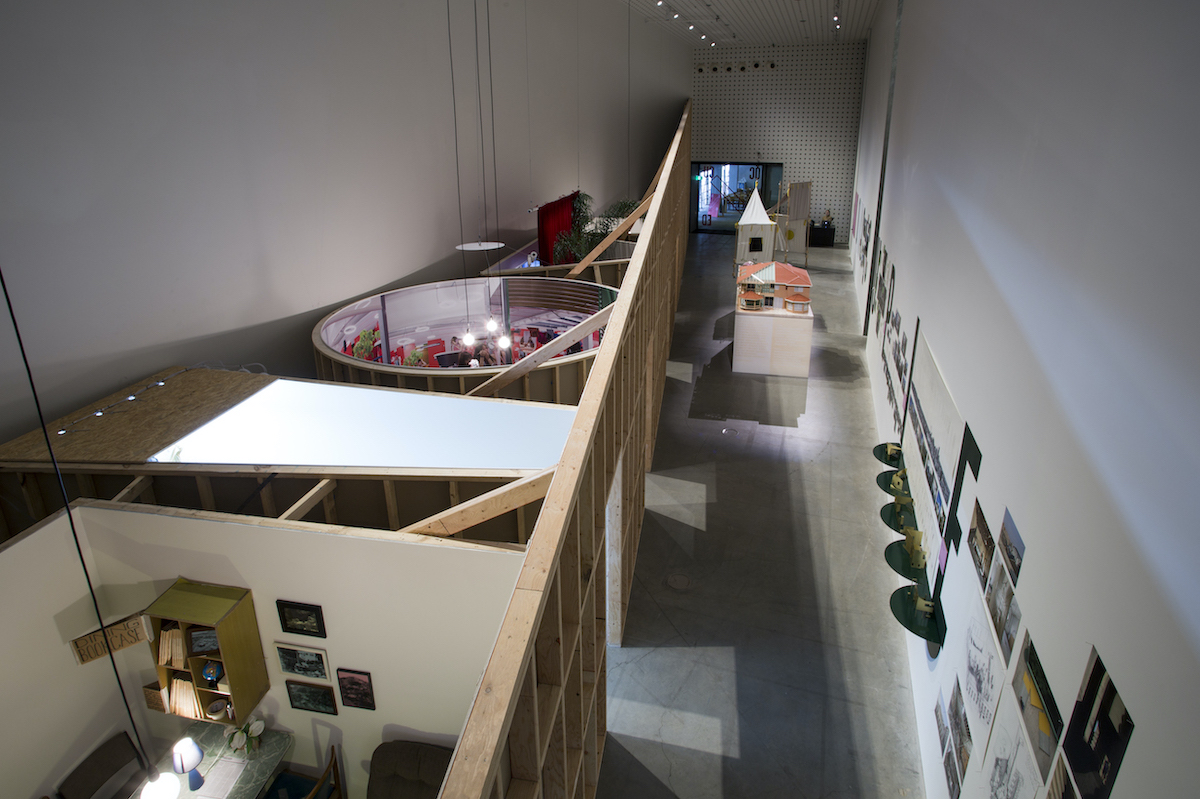
Designed in collaboration with Sibling Architects, Supershared took the form of a 10m2 loft space, hovering over the exhibition. The loft was listed on a number of different space-sharing platforms simultaneously, and willing guests were invited to book time in the space for work, leisure and to host events, introducing an unpredictable and theatrical element to an otherwise static show. Through the construction and occupation of the loft, a complex ecosystem of actors and factors that surround the increasingly professionalised space-sharing economy was exposed, along with the creative potentials of the technology when it is pushed to its limits.
By maximising the number and diversity of platforms on which the loft was listed, Supershared explored the potential to create ‘interference’ within the space, through overlapping bookings that varied in duration. Through digital cross-programming, Supershared created social interactions between parties who booked the space at the same time but for different purposes, constructing surprise encounters, and a scenario wherein participants were encouraged to negotiate and genuinely share – something that appears to have been lost in the transactional marketplace-based ‘sharing economy’. By the end of the exhibition, Supershared had been used as a venue to host exhibitions, dance classes, poetry readings, movie nights, meetings, textile production, panel discussions, and even date nights. Ultimately, Supershared demonstrates how digital platforms can be strategically adapted beyond a market-interface as an architectural tool to intensify and program space in new ways, and suggests the possibility of applying these tools to broader urban settings, to activate and enliven underutilised parts of the city.